

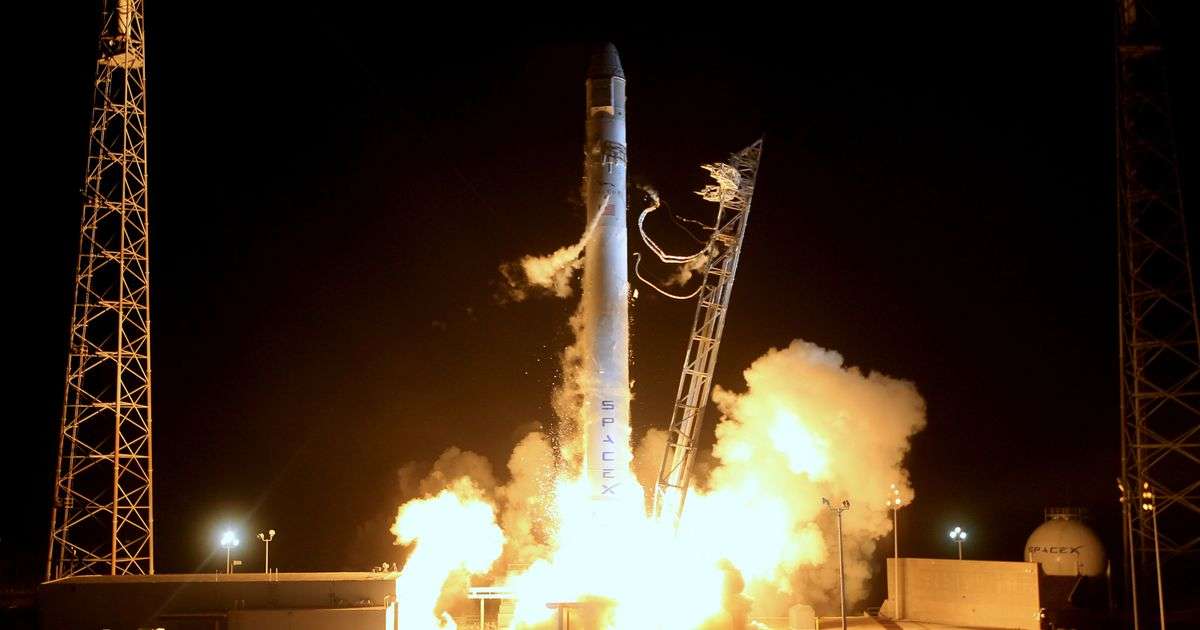
Space insurance is a specialist market that covers satellites and launches against failure, usually for the launch plus the first year in orbit, with premiums commonly quoted between about 5% and 12% of the satellite’s insured value. It is one of the smallest and most volatile insurance lines in the world, because a single rocket failure can erase years of profit.
Key Takeaways
- Space cover typically has three parts: launch, in-orbit and third-party liability
- Launch premiums for proven rockets are often quoted at roughly 4% to 12% of satellite value, while healthy in-orbit cover is cheaper at about 0.5% to 2% a year
- In 2023 insurers reportedly collected about $557 million in premiums but paid about $995 million in claims
- Many launches fly uninsured, especially low-earth-orbit constellations, where the number of satellites acts as its own insurance
- Published market-size estimates conflict widely, so treat any single figure with caution
What Is Space Insurance?
Space insurance, also called satellite insurance, is a specialized branch of aviation-style cover. Wikipedia summarizes it as covering three risks: relaunching the satellite if the launch fails, replacing it if it is destroyed or placed in a wrong orbit or fails in orbit, and liability for damage to third parties from the satellite or launch vehicle.
What Are the Main Types of Cover?
- Pre-launch: covers transport, integration and testing before the satellite is mated to the rocket
- Launch insurance: the most expensive and most commonly bought, covering the period from ignition through initial orbit acquisition
- In-orbit insurance: covers failure or degradation once the satellite is operating, usually bought annually
- Third-party liability: covers damage the launch or satellite may cause to others
| Cover Type | When It Applies | Typical Rate (reported) |
|---|---|---|
| Launch (proven rocket) | Ignition to initial orbit | About 4% to 12% of value |
| Launch plus one year in orbit | Launch and first year of operation | About 5% to 12% of value |
| In-orbit (healthy GEO satellite) | Annual renewal after launch | About 0.5% to 2% per year |
How Much Does Space Insurance Cost?
Orbital Radar estimates launch plus one year at roughly 5% to 12% of value, which for a $300 million satellite is about $15 million to $36 million in premium. Payload Space reports that premiums fell back to roughly 5% to 20% of policy value after the heavy losses of 2019, depending on the rocket. A report cited by Via Satellite says that a typical geostationary satellite on a Falcon 9 would have cost less than 6% at the start of 2023 but around 10% after that year’s losses. The rocket’s track record is the single biggest driver, with newer, less proven vehicles costing more. [VERIFY with a current broker quote.]
The older rule of thumb, noted on Wikipedia, was simple: if a launch vehicle fails one time in ten, the premium would be about ten percent of the satellite’s cost. The same article says roughly 7% of satellites have failed on launch.
How Bad Can the Losses Get?
The market is small, so single events matter. Payload Space notes that 2019 losses reached nearly $800 million against $400 million to $450 million of gross premium, including a Vega launch failure that cost $414 million, then the largest space insurance loss ever. Via Satellite, citing Slingshot Aerospace, reports a new record in 2023: about $995 million paid against about $557 million collected, a net loss of $438 million. The biggest claims were about $445 million for the ViaSat-3 Americas satellite and $348 million for an Inmarsat satellite that suffered a battery failure.
Why Do So Many Launches Fly Uninsured?
Insurance is far from universal in space. Payload Space notes that launch tests are often not insured at all, American operators tend not to insure experimental satellites, and operators in low-earth orbit frequently skip cover. Via Satellite adds that constellation satellites are typically not insured because the sheer quantity works as its own insurance. Commercial geostationary satellites, which cost more and are harder to replace, are the ones typically insured.
Who Provides the Cover?
A SpaceNexus analysis describes a small community of specialist underwriters concentrated in London’s Lloyd’s market, Paris and New York, backed by global reinsurers. That London link is the same market behind many of the oddities in 10 Strangest Insurance Policies Lloyd’s of London Has Written.
How Does This Relate to Celebrity Insurance?
The logic is familiar: a high-value, hard-to-replace asset, a probability of failure and a price built from both. Compare it with how performers are valued in How Celebrity Body Parts Insurance Actually Works, or with another high-stakes risk in Kidnap and Ransom Insurance Explained.
FAQ
How much does it cost to insure a satellite launch?
Commonly quoted at roughly 5% to 12% of the satellite’s value for launch plus one year, depending on the rocket’s track record and market conditions.
What does launch insurance cover?
Loss or constructive total loss of the satellite from ignition through initial orbit, and in some policies into early in-orbit testing.
Are all satellites insured?
No. Commercial geostationary satellites usually are, but experimental satellites and many low-earth-orbit constellation satellites often fly uninsured.
What was the biggest space insurance loss?
A 2019 Vega failure at $414 million was the largest at the time, and 2023 saw record total claims of about $995 million.
Why are premiums so high?
Because failures are rare but extremely costly, the pool of insurers is small and losses in a few years exceed premiums collected.
Does a reused rocket lower the premium?
One market report says reusable rockets can see rates cut by up to 50% after five successful flights, though this is a market report claim and varies by insurer.
Glossary
- Constructive Total Loss: damage so severe that repair or recovery is not worthwhile, treated as a total loss.
- GEO: geostationary orbit, where large communications satellites sit.
- LEO: low-earth orbit, used by many constellations.
- In-Orbit Cover: annual insurance for an operating satellite.
Author Bio
[AUTHOR BIO PLACEHOLDER: add your name, credentials and a professional profile link here.]Sources
- Orbital Radar: The Space Insurance Market (5% to 12% rates, premiums collected)
- Via Satellite: Slingshot Aerospace Report on Record 2023 Insurance Losses (2023 premiums, claims and largest losses)
- Payload Space: The Space Insurance Landscape (2019 losses, uninsured launches)
- Wikipedia: Satellite Insurance (three risks, launch failure rate, rating history)
- SpaceNexus: How Underwriters Assess Launch and In-Orbit Risk (coverage structure, rate ranges, underwriters)
- Market Growth Reports: Space Insurance Market (reusable rocket discount claim)
Related reading: Film Cast Insurance Explained · Racehorse Insurance Explained
Published October 2026. Rates, losses and market size estimates change and differ between sources; confirm with a specialist broker and refresh this article periodically.














Leave a Reply