


Last Updated on October 10, 2026 by Syed Sarim Naqvi
Wine insurance is a specialty policy that protects a wine collection against theft, breakage, fire, flood and temperature or equipment failure, usually paying an agreed or market value instead of the depreciated cash value a homeowners policy would offer. Most collectors assume their home policy already covers the cellar, and most discover the gap only after a loss.
Key Takeaways
- Standalone wine policies are commonly quoted at about $0.40 to $0.80 per $100 of insured value per year, so a $100,000 cellar might cost $400 to $800 [VERIFY with a live quote]
- Two structures dominate: scheduled (bottle-by-bottle, agreed value) and blanket (one limit, flexible)
- Good policies cover temperature and mechanical failure, transit, third-party storage and label damage, which homeowners policies often exclude
- Some carriers automatically cover new purchases for a limited period, for example 90 days at 25% of the itemized cover
- The cellar itself (racking, cooling units, build-out) needs separate attention and can cost $50,000 to $250,000 or more
What Is Wine Insurance?
Wine insurance is coverage built around the unusual risks of storing a perishable, highly valuable, easily broken asset. Specialist policies typically protect against theft, accidental breakage, natural disasters, and spoilage caused by equipment failure or temperature swings, and can extend to transit and off-site storage.
Why Isn’t Homeowners Insurance Enough?
Homeowners policies commonly limit coverage for personal property, apply deductibles that eat into a claim, and may exclude perils such as temperature fluctuation or transit. They also tend to pay actual cash value, which means replacement cost minus depreciation. That is a poor fit for bottles whose secondary-market value may be rising.
| Coverage Feature | Standard Homeowners Policy | Specialist Wine Policy |
|---|---|---|
| Valuation method | Depreciated replacement or cash value | Agreed value or current market value |
| Accidental breakage | Rarely covered | Typically covered |
| Temperature or cooling failure | Usually excluded | Commonly covered |
| Transit and storage | Home address only | Covered in transit and in bonded storage |
| New acquisitions | Not automatic | Often covered automatically for a period |
Scheduled vs. Blanket: Which Structure Fits?
Scheduled coverage lists each bottle or case with its own value, and the insurer pays that agreed figure on a total loss. It suits investment-grade bottles and owners who want to avoid disputes at claim time. Blanket coverage sets one overall limit for the collection and works better for people who buy and drink regularly, since bottles do not have to be added and removed.
A common hybrid for active drinkers is to schedule the high-value “investment” bottles and cover the rotating remainder under a higher blanket limit.
How Much Does Wine Insurance Cost?
Published ranges are fairly consistent. Robertson Ryan and Insure Connecticut both cite roughly $0.40 to $0.80 per $100 of insured value, while Wine Guardian puts standalone policies at about 60 to 80 cents per $100. Insure Connecticut’s example: a $100,000 collection costs $400 to $800 a year, and a $500,000 collection about $2,500 to $4,000 at the $0.50 to $0.80 range.
- Collection value: the larger and more valuable, the higher the premium in absolute terms
- Location: areas prone to wildfire, flood or earthquake cost more
- Diversification: spreading bottles across multiple storage locations can reduce risk
- Cellar quality: monitoring, alarms and well-maintained cooling help
What Does a Good Policy Actually Include?
- Mechanical breakdown: pays if the cooling system fails and the wine is “cooked”
- Label coverage: some policies pay the difference in value if labels are damaged, often called diminution of value
- Automatic cover for new items: Chubb, for example, covers newly acquired items for up to 90 days at 25% of the itemized amount
- Market-value uplift: Chubb will pay up to 150% of the itemized amount if market value has risen above the scheduled figure
- Transit and third-party storage: essential if bottles are ever shipped or held in a bonded warehouse
What About the Cellar Itself?
Custom wine cellars can cost $50,000 to $250,000 or more to build. If racking, cooling units and finishes are not reflected in your dwelling limit, a fire could leave you with the wine paid but the cellar underinsured. Confirm how the structure and equipment are covered when you set up the wine policy.
Is This Related to Celebrity Body-Part Insurance?
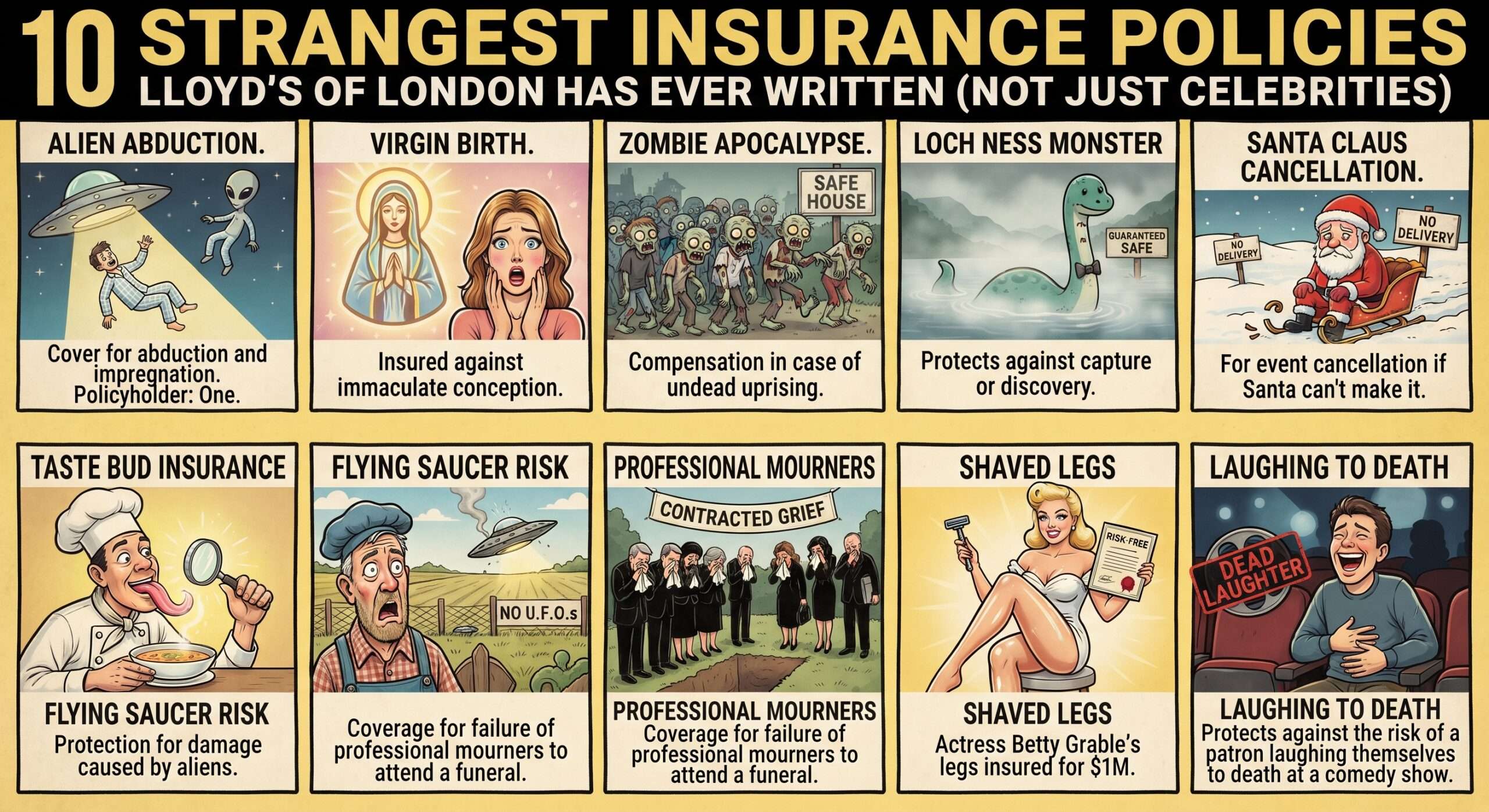
More than you might expect. The famous example is winemaker Ilja Gort, who reportedly insured his sense of smell, a story covered in 10 Strangest Insurance Policies Lloyd’s of London Has Written. The same logic applies at both ends: identify the asset your value depends on, agree a value, and price the risk of losing it.
FAQ
Does homeowners insurance cover wine?
Often only partly. Limits, deductibles and exclusions for temperature failure or transit frequently leave serious collections underinsured.
Do I need a minimum collection value to buy wine insurance?
No specific value is required, though specialist cover tends to make sense once a collection is worth enough that a standard policy sub-limit would not replace it. One broker cites an average collection value of around $200,000.
Does it cover a cooling system failure?
Good specialist policies do, through mechanical breakdown or temperature-failure cover. Homeowners policies usually exclude it.
What if my wine increases in value?
With scheduled agreed value you are paid the scheduled figure, so values should be updated. Some carriers pay up to a percentage above the itemized amount if market value rises, and blanket policies pay current market value up to the limit.
Is wine stored in a professional facility already insured?
Sometimes, as part of the storage service, but the limits and terms may differ from your own policy. Check what the facility covers before assuming you are protected.
Is the wine insurance cost worth it?
At a few dollars per $1,000 of value per year, many collectors consider it inexpensive relative to the loss it protects against, particularly for investment-grade bottles.
Glossary
- Agreed Value: a payout amount fixed in advance with no depreciation.
- Scheduled Policy: insurance that itemizes bottles individually.
- Blanket Policy: one overall limit for the whole collection.
- Diminution of Value: the drop in worth after damage, such as ruined labels.
- Provenance: the documented ownership and storage history of a bottle.
Author Bio
[AUTHOR BIO PLACEHOLDER: add your name, credentials and a professional profile link here.]Sources
- Wine Guardian: Should You Invest in Wine Insurance? (cost per $100, average collection value)
- Robertson Ryan: Protect Your Passion, A Guide to Wine Insurance (premium range, covered perils)
- Insure Connecticut: Private Client Series, Wine Collection Insurance (cost examples, mechanical breakdown, label coverage)
- Insure Connecticut: The Ultimate Guide to Wine Collection Insurance (cellar build-out costs)
- Chubb: Wine and Spirits Insurance (new-item cover, 150% market uplift, agreed value)
- Vintage Cellar: Wine Insurance for Collectors (homeowners vs. agreed-value comparison)
- Distinguished: Wine Insurance Guide (blanket vs. scheduled, risk diversification)
Related reading: Fine Art Insurance Explained · Racehorse Insurance Explained
Published October 2026. Rates and carrier terms change; confirm with a specialist broker and refresh this article periodically.













Leave a Reply