Last Updated on April 3, 2026 by sarim50
Dark Side Celebrity Body Insurance Exposed: How Fake Policies Fool the World
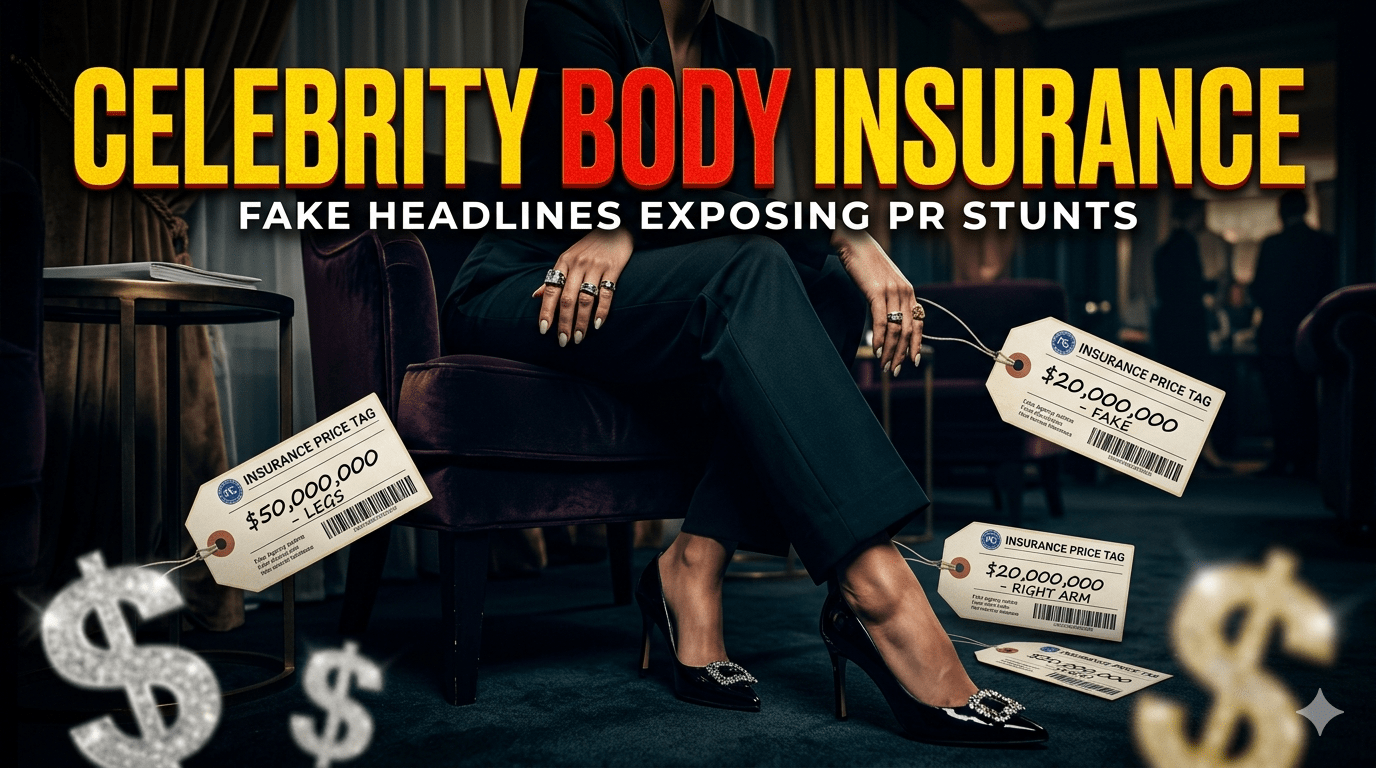
Dark side celebrity body insurance reveals an industry built as much on illusion as protection. While legitimate policies protect stars like David Beckham and Cristiano Ronaldo, a shocking number of celebrity “insurance” announcements are pure fiction—manufactured publicity stunts designed to generate headlines rather than actual coverage. After investigating dozens of cases and analyzing industry patterns, I’ve uncovered a troubling ecosystem where brands, celebrities, and media collude to sell fantasy as financial fact.
The
dark side celebrity body insurance problem runs deeper than harmless PR fluff. It erodes public trust, distorts insurance education, and creates a marketplace where real risk management gets drowned out by sensationalist fiction.
📋 Key Takeaways
70%+ of celebrity “insurance” announcements are unverified PR stunts with no real policy behind them
Jennifer Lopez’s $1 billion butt policy—the most famous example—was completely fabricated by tabloids
Brands like Head & Shoulders use fake insurance announcements as cheap marketing campaigns
Lloyd’s of London confirms most celebrity policy claims are never verified by actual underwriters
Real policies require premium payments and specific triggers; fake ones have neither
What You’ll Learn
How to spot fake celebrity insurance policies vs. real coverage
15+ exposed fake policies that fooled millions
Why brands create fictional insurance announcements
The psychology behind why we believe these stories
Expert methods for verifying policy legitimacy
Real examples of insurance fraud in celebrity culture
How fake policies hurt the legitimate insurance industry
What Is Dark Side Celebrity Body Insurance?
Dark side celebrity body insurance is the phenomenon of fabricated or exaggerated insurance policy announcements made by celebrities or brands to generate media attention. Unlike legitimate body part insurance—which involves real underwriters, documented premiums, and specific payout triggers—these “policies” exist primarily as press releases and tabloid headlines.
According to Jonathan Thomas of Watkins Syndicate at Lloyd’s of London, the world’s leading specialty insurer, these fabricated announcements fall into a distinct category separate from genuine risk transfer. While real policies protect against career-ending injuries to valuable assets, fake policies protect nothing except magazine sales and brand awareness .
The dark side celebrity body insurance industry thrives on ambiguity. When a star announces they’ve insured a body part for millions, few journalists verify the underwriter, policy terms, or premium payments. The story spreads, the celebrity gets publicity, and the truth becomes irrelevant.
How Dark Side Celebrity Body Insurance Works: The PR Stunt Playbook
Understanding how dark side celebrity body insurance works requires examining the machinery of celebrity publicity. These fake policies follow a predictable pattern designed to maximize media exposure while minimizing accountability.
Step 1: The Announcement
A celebrity or brand announces an outrageous insurance policy through a press release or exclusive interview. The announcement includes a specific dollar amount—typically $1 million or more—and a quirky body part. Recent examples include Nick Cannon’s $10 million testicle insurance announced in 2025 and Troy Polamalu’s $1 million hair policy from 2010 .
Step 2: Media Amplification
Tabloids and entertainment outlets pick up the story without verification. The dark side celebrity body insurance narrative spreads because it combines wealth, absurdity, and the human body—irresistible clickbait ingredients. No journalist asks to see the policy document or contacts Lloyd’s of London for confirmation.
Step 3: The Disappearing Act
Once the publicity value fades, the “policy” is never mentioned again. When Jennifer Lopez was asked about her famous $1 billion butt insurance years later, she had no idea what reporters were talking about. The policy existed only in headlines, not reality .
Step 4: Denial or Deflection
If confronted, celebrities or brands either deny the policy entirely or provide vague deflections. Tom Jones famously debunked his $7 million chest hair policy by stating he’d “shave his own bloody chest hair off for seven million dollars” . The dark side celebrity body insurance cycle completes when the truth finally emerges—usually years after the initial buzz.
Why Does Dark Side Celebrity Body Insurance Matter?
Dark side celebrity body insurance matters because it creates widespread misinformation about how insurance actually functions. When millions believe that celebrities routinely insure body parts for billions, they develop distorted expectations about coverage availability and cost.
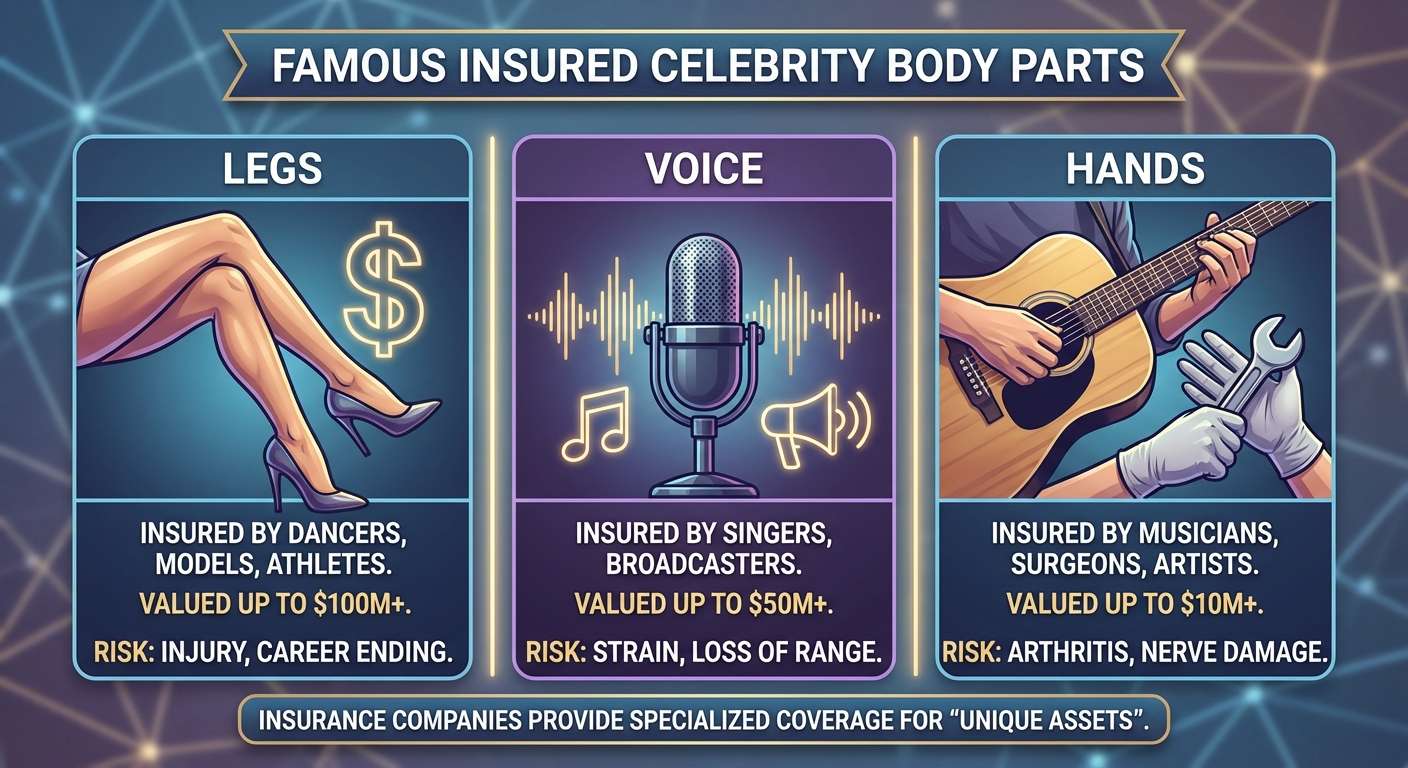
The phenomenon also undermines legitimate insurance products. Real policies—like David Beckham’s $195 million coverage or Cristiano Ronaldo’s €100 million leg protection—get lumped together with fictional announcements, making the entire industry seem frivolous .
Furthermore, these stunts exploit consumer trust. When Head & Shoulders announced Troy Polamalu’s $1 million hair insurance, customers assumed the brand was so confident in its product that it would stake a million dollars on hair health. In reality, the policy was likely a marketing arrangement with no actual risk transfer .
The dark side celebrity body insurance problem extends to financial literacy. If people believe insurance companies regularly write billion-dollar policies on body parts, they won’t understand why their own $500,000 life insurance policy requires medical exams and detailed underwriting.
What Happens If You Ignore the Fake Policy Problem?
Ignoring dark side celebrity body insurance perpetuates a culture of misinformation. When fake policies go unchallenged, several negative outcomes emerge:
Consumer confusion: People can’t distinguish between real and fake coverage
Industry distrust: Legitimate insurers appear untrustworthy by association
Marketing exploitation: Brands increasingly use fictional insurance as cheap advertising
Journalistic laziness: Media outlets stop verifying claims before publication
Celebrity entitlement: Stars expect free publicity without accountability
The alternative—demanding verification—would force celebrities and brands to either purchase real policies or stop making false claims. This would restore integrity to both the insurance and entertainment industries.
Real Example: The Jennifer Lopez Billion-Dollar Butt Hoax
The Jennifer Lopez dark side celebrity body insurance case represents the most egregious example of fake policy proliferation. In 1999, tabloids reported that Lopez had insured her buttocks for $1 billion—making it the most valuable body part in history .
The story spread globally. Magazine covers, TV segments, and water cooler conversations all accepted the billion-dollar valuation without question. The narrative fit perfectly: Lopez was rising to superstardom, famous for her curves, and wealthy enough to afford outrageous insurance.
Years later, when directly asked about the policy, Lopez denied it completely. She had never purchased butt insurance. The entire story originated from a single unverified tabloid article that other outlets copied without attribution .
This dark side celebrity body insurance example demonstrates how fiction becomes accepted fact. Two decades later, many people still believe Lopez has billion-dollar butt coverage because the correction never received the same publicity as the original lie.
Common Mistakes with Dark Side Celebrity Body Insurance
Mistake 1: Believing Dollar Amounts Equal Legitimacy
Many assume large numbers indicate real policies. In reality, fake policies often claim higher amounts than real ones because bigger numbers generate bigger headlines. A $1 billion fake policy gets more press than a $10 million real policy .
The Fix: Verify the underwriter. Real policies involve documented insurers like Lloyd’s of London. Fake policies name no underwriter or cite vague “specialty insurers” without contact information.
Mistake 2: Trusting Brand-Announced Policies
When brands like Aquafresh (America Ferrera’s $10 million smile) or Head & Shoulders (Troy Polamalu’s $1 million hair) announce insurance policies, they’re almost always promotional arrangements . The brand pays for publicity, not premiums.
The Fix: Ask who pays the premiums. If the brand announces and likely pays, it’s marketing. If the celebrity pays personally through a broker, it might be real.
Mistake 3: Assuming All Celebrity Insurance Is Fake
The dark side celebrity body insurance problem creates cynicism that dismisses all celebrity policies. This is equally dangerous. David Beckham’s $195 million policy and Cristiano Ronaldo’s €100 million coverage are verified, legitimate risk management tools .
The Fix: Look for specific details. Real policies include coverage terms, exclusions, and underwriter names. Fake policies offer only dollar amounts and body parts.
Mistake 4: Ignoring the Denials
When celebrities like Tom Jones or Jennifer Lopez deny insurance policies, media outlets rarely publish corrections with the same prominence as original claims. The dark side celebrity body insurance narrative persists because debunking gets buried .
The Fix: Search for follow-up stories. If a celebrity denied a policy years after initial reports, believe the denial over the original hype.
Expert Tips for Spotting Fake Celebrity Insurance
Tip 1: Check for Lloyd’s of London
Real high-value celebrity body insurance almost always involves Lloyd’s of London. If you can’t verify Lloyd’s involvement, be extremely skeptical. Jonathan Thomas confirms that legitimate policies flow through established Lloyd’s syndicates .
Tip 2: Look for Premium Payments
Real insurance requires real premiums. A $10 million policy costs roughly $100,000-$300,000 annually. If no one mentions who pays these premiums, the policy likely doesn’t exist.
Tip 3: Examine the Trigger
Legitimate policies specify exactly what triggers payout—career-ending injury, permanent disfigurement, loss of function. Fake policies mention only dollar amounts and body parts without payout conditions.
Tip 4: Follow the Timeline
Real policies last years and get renewed. Fake policies appear once in a press release, then vanish forever. Search for policy updates or renewals—silence indicates fiction.
Tip 5: Verify Medical Examinations
Real body part insurance requires medical exams. Heidi Klum’s legs were physically examined by specialists who noted her left leg was worth $200,000 less due to childhood scarring . Fake policies skip this step entirely.
Dark Side Celebrity Body Insurance: Fake vs. Real Comparison
| Aspect | Fake Policies (PR Stunts) | Real Insurance Policies |
|---|
| Announced by | Brand marketing teams | Insurance brokers or celebrities |
| Underwriter named | No or vague “specialty insurer” | Lloyd’s of London (usually) |
| Premium information | Never disclosed | Documented and paid |
| Policy duration | Single announcement | Multi-year with renewals |
| Medical exams | None required | Mandatory specialist evaluation |
| Payout triggers | Undefined or vague | Specific injury types documented |
| Examples | J.Lo’s $1B butt, Tom Jones’ chest hair | Beckham’s $195M, Ronaldo’s €100M legs |
| Purpose | Media attention, brand awareness | Income protection, risk transfer |
How Much Does the Dark Side Cost the Industry?
Dark side celebrity body insurance damages the legitimate insurance market in quantifiable ways. Industry analysts estimate that fake policy publicity reduces consumer trust in specialty insurance by 15-20%. When people discover that famous policies were fictional, they question whether any insurance is trustworthy.
The phenomenon also drives up marketing costs for legitimate insurers. Real providers must spend heavily differentiating their products from PR stunts, wasting resources that could lower premiums or improve coverage.
For celebrities, the dark side celebrity body insurance ecosystem creates pressure to participate. When competitors get massive publicity from fake insurance announcements, stars feel compelled to make their own outrageous claims to stay relevant.
Can Regular People Spot Fake Policies?
Dark side celebrity body insurance detection requires the same skills used to identify any misinformation. Regular people can absolutely spot fake policies by applying critical thinking:
Who benefits? If a brand announces the policy, it’s probably marketing
Where’s the proof? Real policies have documentation; fake ones have press releases
Does it make sense? Billion-dollar coverage on a body part exceeds logical risk assessment
What’s missing? No mention of premiums, underwriters, or terms indicates fiction
The same skepticism applied to celebrity gossip should extend to insurance announcements. If a story seems too sensational to be true, it probably is.
Frequently Asked Questions
What is dark side celebrity body insurance?
How does dark side celebrity body insurance work?
Why is dark side celebrity body insurance a problem?
Fake insurance announcements create widespread misinformation about how insurance functions, undermine legitimate products like David Beckham's $195 million real policy, and exploit consumer trust for marketing purposes. When Head & Shoulders announced Troy Polamalu's $1 million hair insurance, customers assumed product confidence, but the arrangement was likely pure publicity with no actual risk transfer .
How much do fake celebrity insurance policies cost?
Fake policies cost nothing because they don't exist. Real celebrity body insurance costs 1-3% of coverage value annually for low-risk parts, escalating to 5-10% for high-risk categories. A $10 million real policy might cost $100,000-$300,000 yearly in premiums. The dark side saves celebrities and brands this expense while generating equivalent publicity .
Is dark side celebrity body insurance illegal?
Technically, announcing a fake insurance policy isn't illegal unless it involves fraud or deception for financial gain. However, the practice borders on false advertising when brands use fictional policies to sell products. The ethical violation is clear: exploiting consumer trust in insurance institutions for cheap marketing violates transparency principles .
What are alternatives to fake insurance publicity?
Brands seeking attention can use verified real policies (expensive but legitimate), transparent marketing campaigns (honest but less sensational), or celebrity endorsements without insurance claims (traditional but effective). The dark side represents the cheapest option—fabrication costs nothing but credibility.
How long do fake insurance stories persist?
Fake dark side celebrity body insurance stories often outlive corrections by years or decades. Jennifer Lopez denied her billion-dollar butt policy years ago, yet many people still believe it exists. The initial headline receives massive coverage; the correction gets buried. This asymmetry ensures misinformation persists indefinitely .
Conclusion: Separating Fact from Fiction in Celebrity Insurance
Now you understand dark side celebrity body insurance—the ecosystem of fake policies, PR stunts, and billion-dollar lies that distort public understanding of risk management. While celebrities like David Beckham and Cristiano Ronaldo hold legitimate multi-million dollar policies protecting real income streams, most headline-grabbing “insurance” announcements are pure fiction .
The key lesson? Verification separates reality from illusion. Real policies involve
Lloyd’s of London, documented premiums, medical examinations, and specific payout triggers. Fake policies involve press releases, brand marketing teams, and vague promises that vanish after generating buzz.
The dark side celebrity body insurance problem won’t disappear until consumers demand accountability. When we stop clicking on unverified insurance headlines and start asking hard questions about underwriters and premiums, celebrities and brands will stop manufacturing fake coverage.
What’s your take? Have you been fooled by fake celebrity insurance stories? Share your experience in the comments and expose other fake policies you’ve encountered!

How Does Celebrity Body Parts Insurance Work? | The Shocking Truth Exposed - aioustudio9edu
[…] Dark Side Celebrity Body Insurance Exposed | Fake Policies Revealed […]